
Last updated October 16, 2026
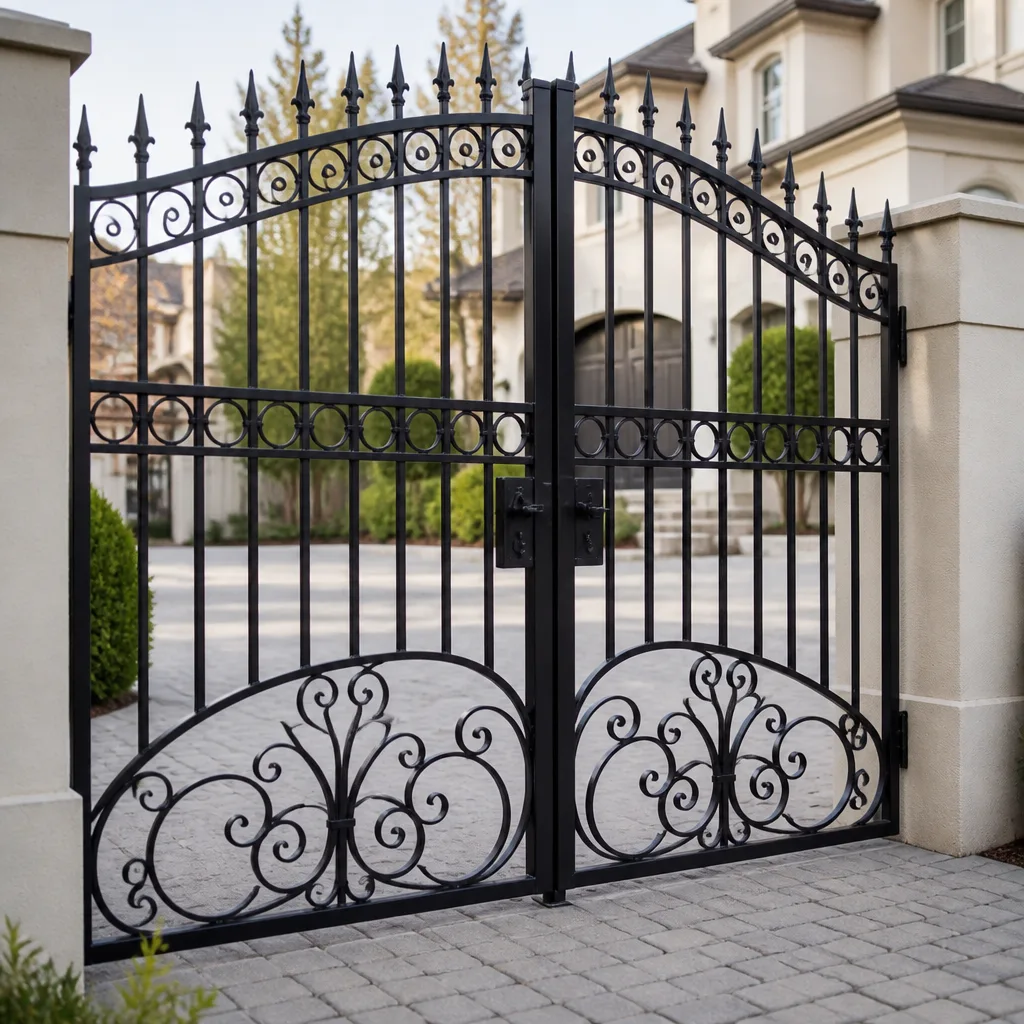 Wrought iron
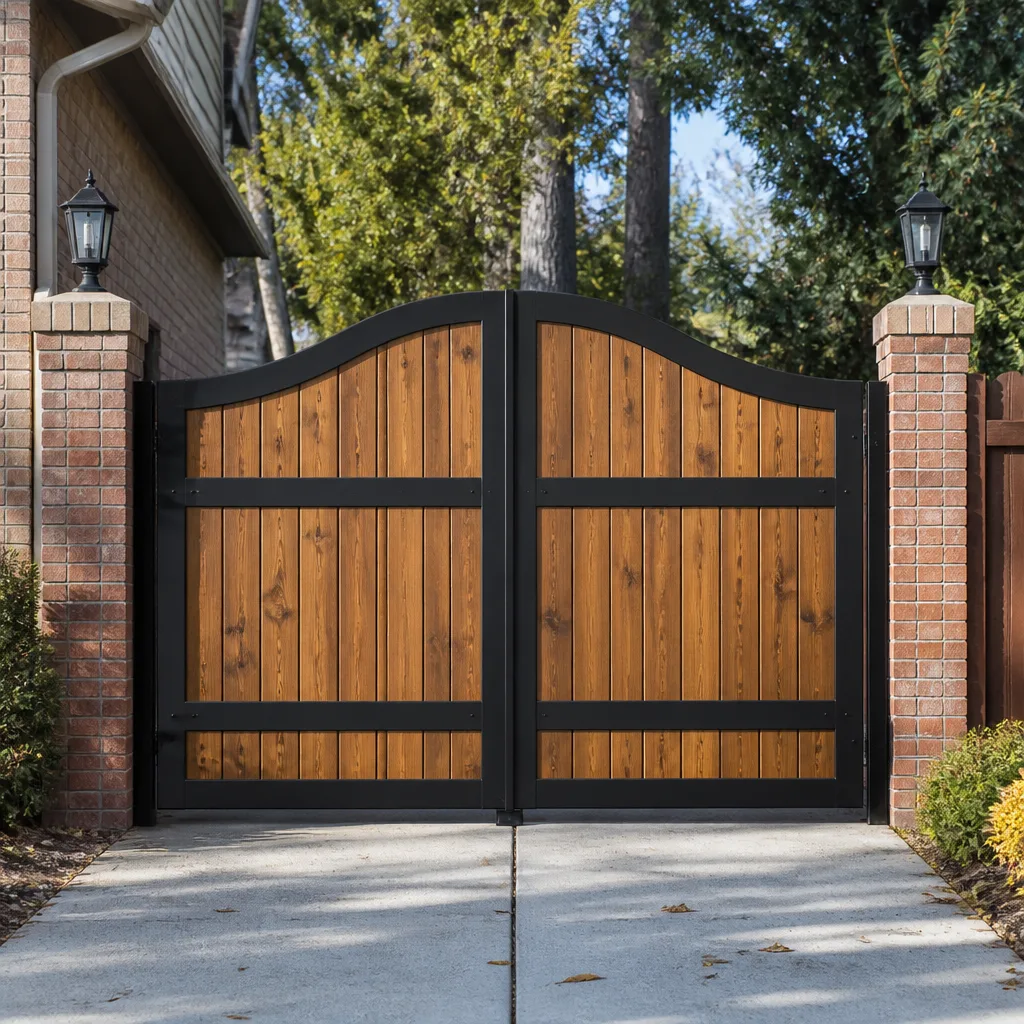 Wood & steel frame
 Farm & ranch
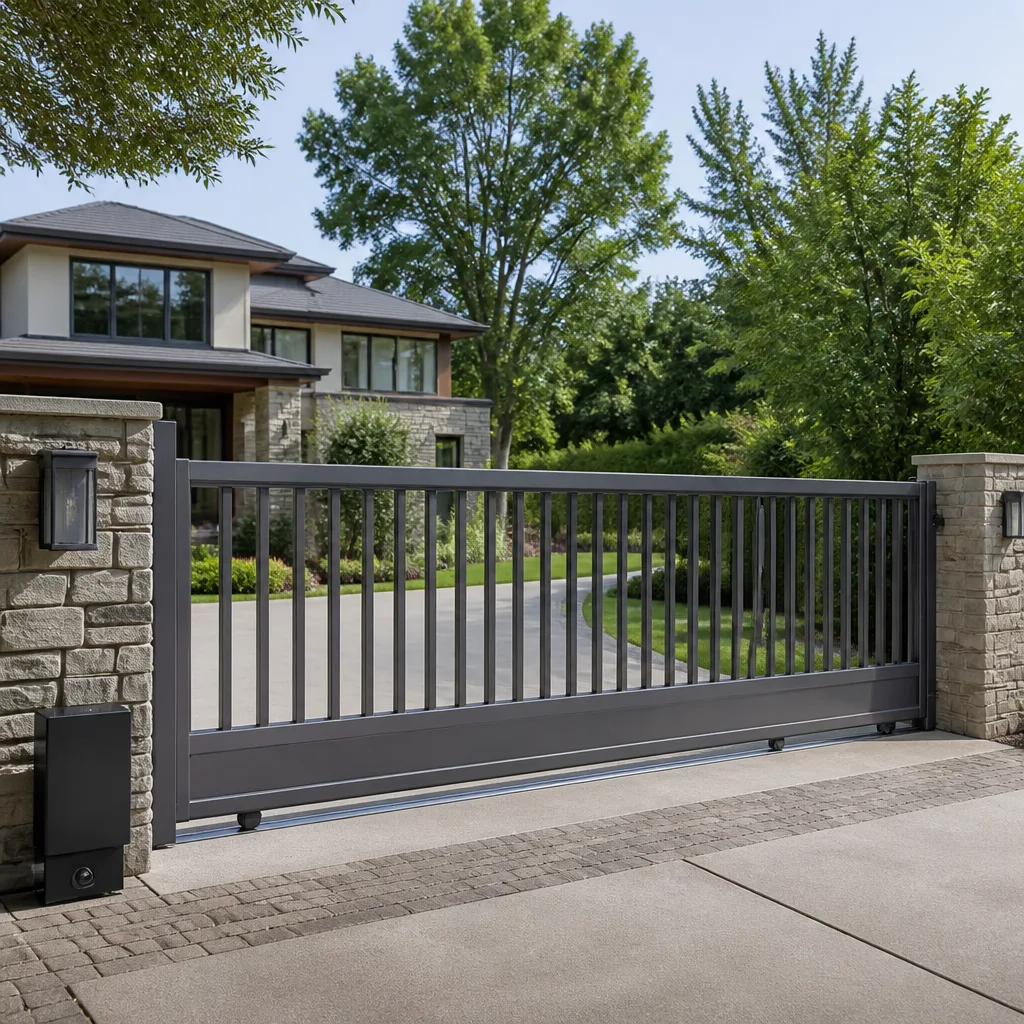 Sliding driveway gates
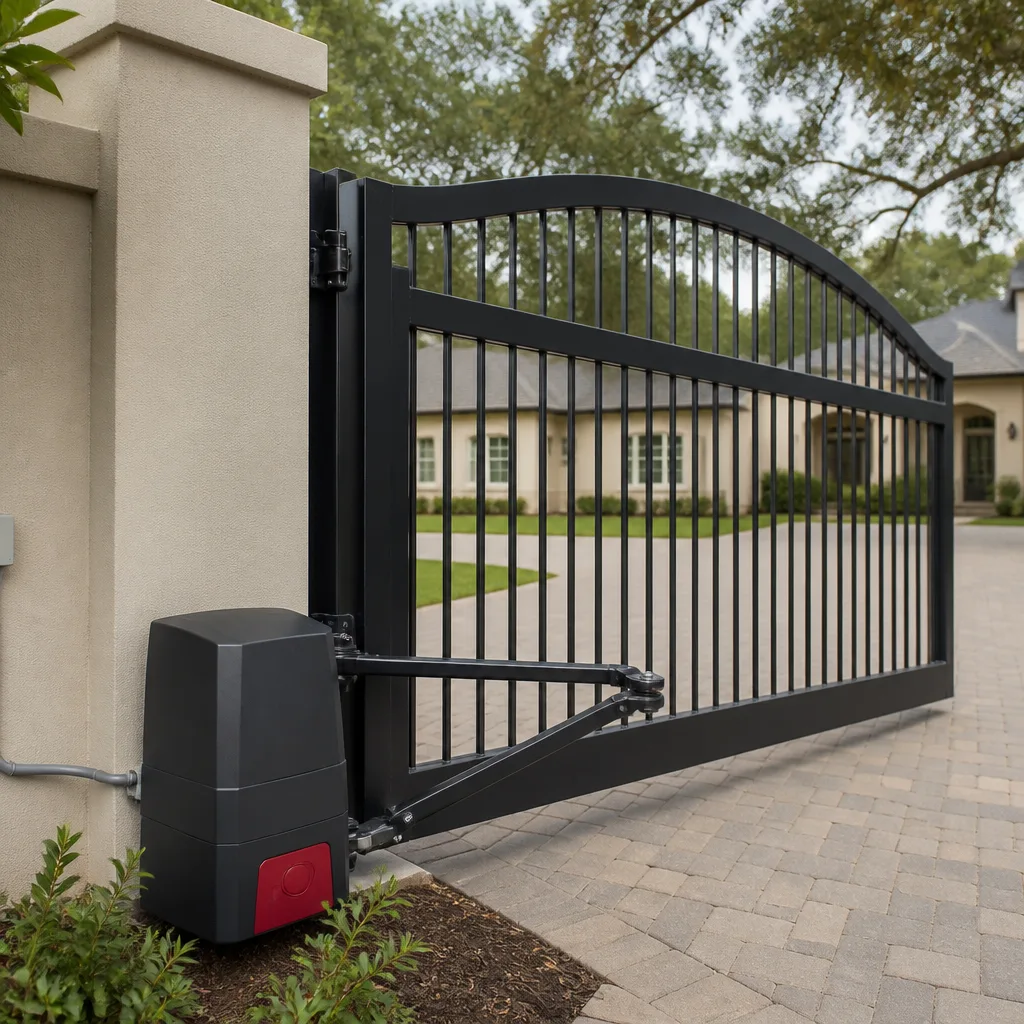 LiftMaster operators
Free on-site gate assessment - hinges, posts, and your LiftMaster or Nice gate operator checked before anything is quoted
The assessment is free and the quote is the invoice.
Get your free estimateSeasonal Gate Repair Care for Fort Lauderdale: Year-Round Homeowner’s Guide
Most seasonal home guides tell Fort Lauderdale homeowners to winterize their gate in October. That advice was written for Michigan. October in South Florida is still peak hurricane season, and the real pivot happens in December, when the risk shifts from wind damage to accelerated rust caused by storm salt residue working into every hinge, bracket, and limit switch. This guide replaces the four-season model with the calendar that actually governs gate performance here: storm season and recovery season. You’ll learn what to check each month, what actually damages gates in this climate, and which tasks prevent the 3 a.m. failure call the week after a named storm.
Styles & brands we work with
Quick Answer
Seasonal gate care in Fort Lauderdale means running a storm-season prep checklist before June, doing a mid-season check in September, and completing a post-season salt flush and rust audit in December. The two most consequential tasks are testing your gate’s manual release before storm season and flushing salt residue from metal components after it. A gate that follows this calendar rarely fails without warning, and when it does fail, Gate Repair services are almost always smaller and cheaper.
Table of Contents
- Why Fort Lauderdale Needs Its Own Gate Calendar
- The Two Seasons That Actually Matter: Storm Season and Recovery Season
- Month-by-Month Fort Lauderdale Gate Task Calendar
- Pre-Storm Prep and the Morning-After Checklist for Automated Gates
- UV, Sun, and Salt: The Three Forces That Wear Gates Faster Here
- The Dry Season Rust Audit: January Through March
- How to Document Your Gate Before Storm Season (and Why)
- Common Mistakes to Avoid
- When to Call a Professional
- Frequently Asked Questions
- The Bottom Line
Why Fort Lauderdale Needs Its Own Gate Calendar
Gate maintenance advice written for northern climates assumes a winter that freezes water inside gearboxes and a summer that bakes paint off steel. Neither is the primary threat in Fort Lauderdale. What we deal with here, on service calls from Rio Vista to Coral Ridge and across the barrier island, is a combination of salt-laden air, intense year-round UV, and a six-month stretch where a named storm can arrive with 36 hours of notice. The gate motor (the box that slides or swings your gate automatically) sits in that environment 365 days a year, and the wear pattern it develops is unlike what a manufacturer’s generic maintenance schedule anticipates.
A homeowner in Fort Lauderdale who follows a spring-versus-fall calendar is preparing for the wrong forces at the wrong time. The correct frame is simpler and more accurate: before June, everything you do is about surviving wind and electrical surges. After November, everything you do is about removing salt and preventing corrosion. Our Gate Repair in Fort Lauderdale work repeatedly confirms the same pattern: the failures that arrive as emergency calls in the first week of December are almost all salt-corrosion failures from October and November storms, not storm-force damage itself.
The Two Seasons That Actually Matter: Storm Season and Recovery Season
Fort Lauderdale has a rainy season that runs roughly May through October and a dry season from November through April. For gate care purposes, those line up with the two phases that matter: storm season, when the gate’s job is to stay locked and functional through wind and power loss, and recovery season, when the gate’s job is to shed salt and prove it is not quietly corroding. Thinking in these two windows simplifies every decision about maintenance timing, parts replacement, and when to schedule professional service.
Storm Season (June 1 – November 30)
During storm season, the priority is mechanical reliability under load and electrical resilience during power events. This is when gate hinges should be checked for tightness, battery backups tested, and the manual release mechanism exercised. The failure most likely to strand a homeowner during storm season is not a bent gate leaf but a dead battery backup that only reveals itself when the power actually goes out. Testing it in June is the difference between a gate that functions through a power outage and a gate that has to be manually shoved open in the rain at night.
Recovery Season (December 1 – May 31)
Once the last named storm threat passes, the work changes. Salt that accumulated on metal surfaces from storm surge spray, rain-driven sea air, and even standing puddles begins its chemical work on steel, aluminum brackets, and electrical connections. Recovery season is for inspection, flushing, lubrication, and replacement of anything that shows early corrosion. Every year we see gates in Fort Lauderdale coastal neighborhoods like Las Olas Isles and Harbordale where the failure mode in February or March is directly traceable to salt left behind in November.
Month-by-Month Fort Lauderdale Gate Task Calendar
The following calendar is built for Fort Lauderdale’s actual climate pattern. Each month lists the one or two tasks that matter most that month, based on what we see on service calls in this city year after year. None of these tasks requires specialized tools, and most take under fifteen minutes.
| Month | Primary Task | Why This Month |
|---|---|---|
| January | Inspect rubber seals and bottom sweeps for drying cracks | Dry-season low humidity has peaked; rubber hardens and splits now |
| February | Full rust audit on all metal components | Salt from prior storm season has had 8+ weeks to react |
| March | Lubricate hinges, bearings, and chain/belt drives | Rising humidity returns but before daily rain arrives |
| April | Check control board for heat damage; clean vents | Pre-summer check before daily temps settle above 85°F |
| May | Test battery backup; schedule any deferred repairs | Final month before hurricane season opens |
| June | Full storm-prep: manual release test, battery charge, photo eye cover | Hurricane season begins; this is the month that matters most |
| July | Check that gate remains square; tighten all hardware | Daily thunderstorms soften soil; posts can shift slightly |
| August | Clean and inspect photo eyes; test auto-reverse | Peak humidity produces grime buildup on sensors |
| September | Mid-season check: repeat battery test, inspect for new play in hinges | Statistically the most active month for named storms |
| October | Trim vegetation away from gate path and sensor line | Growth from rainy season now crowds the gate track |
| November | Document condition with photos; note any new noises | After storm season peak; evidence for insurance if needed |
| December | Post-season salt flush; wash gate, track, and motor housing | Salt removal now prevents February rust failures |
January: The Rubber Cracking Month
Fort Lauderdale’s dry season runs roughly November through April, and January is when the cumulative effect of weeks of low humidity shows up in rubber components. Gate bottom sweeps, weatherstripping, and the rubber boots around limit switches lose moisture and develop hairline cracks. These cracks are not just cosmetic. A cracked bottom sweep lets leaves, dirt, and standing rainwater enter the gate track, which increases wear on wheels and rollers. It also creates a gap where pests can find access to the motor housing. Check every rubber surface you can see on the gate and the gate motor in January. If a sweep is stiff rather than flexible, plan to replace it before the rainy season returns.
February: The Dry-Season Rust Audit
February is the month the salt left behind by the prior storm season reveals itself. By mid-February, any salt that accumulated on brackets, bolts, and unpainted steel in October or November has had time to produce visible corrosion. Look carefully at the lowest points of the gate: the bottom rail, the hinge plates, and the brackets where the gate motor mounts to the concrete pad. These are the areas where saltwater spray and rain runoff concentrate. Surface rust in these locations is a warning sign. Wire-brush it away, apply a rust converter, and monitor. Deep pitting is a stronger signal that replacement of the affected part is the safer path than continued patching. In our experience across Fort Lauderdale, February is the month when homeowners discover damage they did not know occurred in November.
March: Lubrication Month
By March, humidity begins its climb back up, but the daily downpour pattern has not yet settled in. This is the ideal window for lubrication work on hinges, bearings, chain drives, and the bearing surface of a belt drive. The goal is a thin, even film on moving metal parts, not a heavy coating that collects dust. Excess lubricant is worse than none in South Florida because dust mixed with oil creates an abrasive paste that accelerates wear. Wipe away old grease first, then apply fresh lubricant sparingly. If your gate uses a chain drive, inspect the chain for slack while you are there. A chain that droops more than about half an inch when pressed with a finger is too loose and should be tensioned before storm season puts real load on it.
April: Control Board and Heat Check
April is when Fort Lauderdale temperatures begin their climb toward the mid-80s that will persist for six months. The control board inside your gate motor generates its own heat during operation, and ambient heat adds to that load. Check that the motor housing’s vents are clear of debris and that the housing has not become a nest site for insects or small reptiles. If the control board has a visible cooling fan, verify it spins freely. A control board that runs hot fails early, and the failure often presents as intermittent operation long before it becomes total. April is also the right month to schedule any deferred professional service, because the Electric Gate Repair in Fort Lauderdale calendar fills quickly once storm season begins in earnest.
May: Battery and Deferred Repair Month
May is the final full month before hurricane season, and it is the month when homeowners should test the battery backup that powers the gate during a utility outage. Most modern gate motors have a built-in battery backup, but the battery degrades over time, and a battery that tested fine last year may have lost capacity. The test procedure varies by brand. On LiftMaster and Elite models, there is usually a test button on the control board or a diagnostic sequence you can run from the keypad. If the battery is more than three years old in Fort Lauderdale’s heat, assume it is near the end of its life and plan a replacement. May is also the month to schedule any repair that has been deferred, because a gate with a known issue going into June is a gate that will fail in August. Our Gate Motor Repair in Fort Lauderdale service sees the same pattern every year: the June surge of calls is dominated by homeowners who noticed a problem in March and hoped it would fix itself.
June: The Month That Matters Most
June 1 is the first day of hurricane season, and the storm-prep checklist below should be completed by that date. This is not a theoretical exercise. A gate that has not had its manual release tested in a year, and whose battery is unproven, and whose photo eyes sit exposed, is a gate that becomes a serious problem during a power outage or storm event. The full pre-storm checklist appears in its own section below.
July and August: Peak Rain and Grime
July and August bring daily thunderstorms, high humidity, and standing water. The soil under a gate post can become saturated, and a post that was perfectly plumb in June may shift slightly in July. The gate then binds against the catch or drags on the track. Check that the gate closes squarely by watching the gap on each side as the gate meets its catch. A tightening gap on one side means the post has moved. This is also when photo eyes accumulate grime from rain splash, dust, and insect activity. A dirty photo eye causes the gate to refuse to close or reverse mid-cycle. Clean the lenses with a soft cloth and verify that the auto-reverse function works by placing an object in the gate path and confirming the gate stops and reverses.
September: Mid-Season Check
September is statistically the most active month for named storms in the South Florida region. The gate that passed its pre-season checks in June has now been through three months of heat, rain, and humidity. Repeating the battery test and inspecting for new play in the hinges takes less than twenty minutes, and it catches failures before the month’s peak storm activity. If you notice anything out of the ordinary, this is not the time to postpone the call.
October and November: Vegetation and Documentation
October is when months of rainy-season growth have pushed vines, palm fronds, and bushes into the gate path. Trim anything that can touch the gate, the track, or the photo eye beam. Vegetation across the photo eye path is a common cause of gates that refuse to close, because the beam is interrupted by a leaf or stem. November is when storm season’s peak winds down, and it is the right moment to photograph the gate from multiple angles. Those photos are your baseline evidence for any insurance claim or warranty discussion if damage is discovered later.
December: Post-Season Salt Flush
December is the most important maintenance month of the year in Fort Lauderdale’s coastal zone, and the one most likely to be skipped. Storm season leaves salt residue on every exposed surface of the gate, brackets, track, and motor housing. Rain alone does not wash this residue away because Fort Lauderdale’s rain is not actually pure fresh water near the coast; sea spray and atmospheric salt are present throughout the wet season. The fix is a deliberate rinse: wash the gate, track, and motor housing with clean water, paying attention to the underside and the lowest points where salt concentrates by gravity. Be careful to avoid spraying water directly into electrical connections or the motor’s vent openings. A garden hose with a gentle spray, not a pressure washer, is the right tool. While the gate dries, inspect every metal surface for the first sign of corrosion. Removing salt in December, before the dry season lets it work for three months, prevents the majority of February rust failures.
Pre-Storm Prep and the Morning-After Checklist for Automated Gates
An automated gate in the path of a named storm has three vulnerabilities: loss of power, loss of manual control, and loss of sensor function. The pre-storm and post-storm checklists below address each directly. Complete the pre-storm checklist in late May or the first week of June, and repeat the most important items in September. Complete the morning-after checklist as soon as it is safe to go outside.
Pre-Storm Checklist
- Test the manual release. Every automated gate has a manual release mechanism that disconnects the gate leaf from the motor so it can be operated by hand. Know where yours is, how it engages, and how to re-engage it. Test it in daylight, not for the first time during a power outage at night.
- Charge or replace the battery backup. The battery backup is what keeps your gate operable when utility power drops. If the battery is older than three years in South Florida heat, plan a pre-season replacement.
- Cover or protect the photo eyes. Photo eyes are the small paired sensors near the ground on each side of the gate opening. They are in physical danger from wind-blown debris. Cover them with a sturdy protective shroud if the storm is expected to bring significant winds, and remove the cover after the storm passes.
- Tighten all hardware. Hinges, brackets, track bolts, and the gate motor mounting bolts all should be checked and tightened. Wind vibration loosens hardware over time, and a gate with loose hinge bolts is a gate that will bind or sag under storm load.
- Trim overhanging vegetation. A large palm frond or branch can crash onto the gate or track during a storm. Remove anything that could fall on the gate or block its path.
- Photograph the gate’s condition. Dated photos taken before the storm create an evidence trail for insurance and repair decisions. Documentation is covered in its own section below.
The Morning After: Post-Storm Checklist
- Check for physical damage to the gate leaf and track. Look for dents, bends, loose track sections, and debris in the track path.
- Test the manual release again. The gate may have shifted or the motor may have taken water. The manual release is your way to keep the gate usable during a power outage or while the motor is being assessed.
- Inspect the gate motor housing for water intrusion. Check for standing water around the base of the motor, water stains inside the housing, or moisture in the electrical compartment.
- Check that the photo eyes are clean, aligned, and undamaged. If the gate refuses to close after a storm, the photo eyes are the first place to look.
- Run a full open-close cycle and listen. Any grinding, squealing, or hesitation that was not there before the storm should be investigated before the gate is put back into normal daily use.
- Document everything. Photograph any damage before repairs are made. This matters for insurance claims.
UV, Sun, and Salt: The Three Forces That Wear Gates Faster Here
Gate components in Fort Lauderdale age faster than the same components in Atlanta or Nashville. The reasons are measurable: higher year-round UV exposure, constant salt presence in the coastal air, and daily thermal expansion and contraction from the heat cycles. Understanding these three forces explains why a northern maintenance schedule fails here.
UV Exposure and Wiring Insulation
South Florida’s sun angle delivers more intense UV radiation than almost anywhere else in the continental United States. Gate wiring that runs outside conduit, or the portions of wiring that emerge at the hinges and the motor connection, absorbs this UV year-round. The plasticizers in PVC wire insulation break down under UV, and the insulation becomes brittle over time. Eventually, hairline cracks open, and moisture enters the wiring. The result is intermittent short circuits, phantom sensor triggers, and control board failures that are difficult to diagnose because the damaged section is hidden inside a jacket that looks fine from the outside.
The practical inspection interval for wiring in Fort Lauderdale is every two years, not the five years implied by generic maintenance schedules. Run your fingers along visible wiring and flex it gently. If the insulation cracks or flakes, the wiring needs repair or replacement before it fails catastrophically. This is particularly important on the hinge side of a swing gate, where the wire flexes with every cycle.
Control Board Housings and Thermal Cycling
The control board inside a gate motor produces heat during operation, and the Fort Lauderdale sun adds more. Daily high temperatures in the upper 80s and low 90s for months at a time raise the internal temperature of the motor housing well above ambient. The board cycles between hot in the afternoon and cooler overnight, and that thermal expansion and contraction flexes solder joints and stresses connectors. Electronics in this environment fail earlier than identical boards in temperate climates. If your gate motor is positioned on the west side of the house where it takes direct afternoon sun, the heat load is higher still.
Salt and the Corrosion Gradient
Salt is the most aggressive of the three forces in Fort Lauderdale. The salt gradient is strongest within the first mile or two of the coast, but sea salt penetrates inland much farther through the air, especially during storm events. Salt accelerates every form of metal corrosion, and it corrodes aluminum in ways that fresh water does not. The gate frame, hinge plates, track sections, and the galvanized or powder-coated fittings all carry a salt residue load during storm season. The December salt flush described in the calendar above is the single highest-value maintenance task a coastal Fort Lauderdale homeowner can perform.
The Dry Season Rust Audit: January Through March
The dry season in Fort Lauderdale runs roughly November through April, with the lowest humidity from January through March. Low humidity feels less damaging than the summer’s rain, but for gate components it creates a specific category of failure: drying and cracking of rubber and polymer seals, combined with the slow chemical work of salt left behind from storm season. This section explains how to conduct a dry-season rust audit and what to look for.
Why the Dry Season Is Harder on Seals Than It Looks
Rubber components in gate systems include bottom sweeps, wheel roller covers, limit switch boots, and the weather seals around the motor housing. These parts are formulated to tolerate a certain moisture range. In Fort Lauderdale’s dry season, humidity can drop below 50% for weeks at a time. The rubber loses embedded moisture and becomes stiff. Stiff seals crack. Once cracked, they fail permanently when the rainy season returns and water enters through the openings. Replacing cracked seals in February or March is a smaller job than repairing water damage in July.
The Audit Procedure
- Wash the gate lightly to expose any hidden surface rust under dirt.
- Start at the bottom and work upward. The bottom rail, bottom hinge plates, and gate wheels take the most salt and water exposure.
- Inspect each fastener. Bolts, screws, and hinge pins. Light surface rust can be treated. Pitted or flaking metal should be replaced.
- Check the motor mount and the concrete pad for rust staining that indicates water pooling.
- Check the track for rust bloom on the wheel contact surfaces, which increases friction and wear.
- Document anything you find with photos and measurements so you can track whether it progresses.
How to Document Your Gate Before Storm Season (and Why)
Dated photographs of your gate’s condition before storm season create an evidence trail that supports insurance claims, helps service technicians understand what changed, and gives you a baseline for year-over-year wear comparison. This is not a suggestion from a cautious homeowner’s manual; it is a practical tool for managing what can be a significant repair cost after a named storm or after months of undetected salt corrosion. For The Complete Guide to Gate Repair in Fort Lauderdale, see our detailed resource.
What to Photograph
- The full gate from both sides, showing the overall condition and the gap alignment.
- Close-ups of hinges, especially the bottom hinges where corrosion starts first.
- The gate motor, including the housing, the mounting bracket, and any visible wiring.
- The battery backup compartment if accessible, showing the battery and its connections.
- The track or gate path, showing the condition of the rail and any wear marks.
- The photo eyes, showing their alignment and the condition of their housings.
Why Dated Photos Matter for Insurance
When a homeowner files a claim for storm damage to a gate, the insurer’s first question is whether the damage predated the storm. Without a pre-storm baseline, the homeowner has no way to prove the gate was undamaged before the event. Photos timestamped in May or early June, before the first named storm, answer that question. They establish the gate’s pre-storm condition and make it much harder for a claim to be denied on the basis of pre-existing damage. The same photos help our Warden Gate Repair Fort Lauderdale home team understand what changed, which speeds up diagnosis and keeps the repair scope correct.
Common Mistakes to Avoid
- Following a northern seasonal schedule. Applying an October winterization checklist to a Fort Lauderdale gate means focusing on freeze damage that never happens while ignoring salt and UV damage that happens every year.
- Skipping the manual release test. The manual release is the only way to operate the gate during a power outage, and discovering you do not know how to use it during a storm is a self-inflicted problem.
- Assuming rain washes salt away. Fort Lauderdale’s coastal rain contains its own salt load. Only a deliberate fresh-water flush in December removes accumulated salt from metal surfaces.
- Using a pressure washer on the gate motor. Pressure washers force water into seals and electrical connections. A garden hose with a gentle spray is the correct tool for the December salt flush.
- Over-lubricating hinges and chains. Excess lubricant in South Florida’s dusty dry season creates abrasive paste. Clean first, then apply a thin, even film.
- Ignoring cracked bottom sweeps in January. A small crack in a rubber sweep by February becomes a water and debris inlet by May, increasing track wear and creating a path for pests into the motor housing.
- Waiting until after a storm to find a professional. The best time to establish a relationship with a gate repair provider in Fort Lauderdale is before storm season, not the week after a hurricane. Post-storm schedules fill quickly, and the gate will not wait its turn.
When to Call a Professional
Some maintenance tasks are homeowner work. Others require experience, parts access, and diagnostic equipment. Call a professional when the gate motor is making a new sound, when the gate hesitates or reverses at random intervals, when you find corrosion that has progressed beyond surface rust, when the battery backup fails a test, when the manual release binds or does not re-engage properly, or when the gate has taken a physical hit during a storm. High-tension springs and cables on some gate designs carry stored energy that can cause serious injury if handled incorrectly; these components should always be serviced by someone who works on them professionally. Warden Gate Repair Fort Lauderdale offers free estimates in Fort Lauderdale, with a written price before any work begins. Call (754) 354-9065.
Frequently Asked Questions
Once per year by a professional is the right baseline for a gate in Fort Lauderdale’s salt and UV environment, with monthly homeowner checks following the calendar in this guide. Gates within one mile of the coast benefit from twice-yearly professional service: once in May before storm season and once in December for the post-season salt assessment.
Afternoon heat in Fort Lauderdale causes thermal expansion of the gate leaf, track, and hardware. If the gate was installed with tight clearances, that expansion makes moving parts bind. This pattern usually indicates a clearance or alignment issue that will worsen over time. Call a gate repair professional for an assessment before the binding causes motor damage.
Yes. Homes within a mile of the Intracoastal Waterway or the Atlantic Ocean in Fort Lauderdale experience a significantly higher salt load than inland neighborhoods. The December salt flush should be performed twice per season in these zones, and the February rust audit is non-negotiable. Consider professional inspections twice per year instead of once.
In Fort Lauderdale’s heat, salt, and UV combination, a well-maintained gate motor from a brand like LiftMaster, Mighty Mule, FAAC, or Elite typically lasts eight to twelve years. Without maintenance, the lifespan drops to five to seven years. The difference is almost entirely a function of salt corrosion management and battery replacement.
A full gate service includes a comprehensive inspection of the gate leaf, hinges, track, gate motor, battery backup, photo eyes, control board, and wiring, plus lubrication, hardware tightening, safety reverse testing, and a written report of anything that needs attention. The written price is provided before any work begins. Call (754) 354-9065 for an exact service quote in Fort Lauderdale.
Warden Gate Repair Fort Lauderdale answers the phone live 24 hours a day, 7 days a week, and same-day service is available for repair calls in Fort Lauderdale when the schedule allows. Every technician travels with the most common replacement parts for LiftMaster, FAAC, Mighty Mule, and Elite systems to improve the chance of a one-visit repair.
The Bottom Line
Fort Lauderdale does not have four seasons. It has two: storm season and recovery season. A gate care calendar built around those two windows, with the specific monthly tasks mapped in this guide, prevents the majority of failures that arrive as emergency calls after a named storm or during February’s post-salt rust window. Test the battery and manual release before June. Flush the salt in December. Audit the rust in February. Document everything with dated photos. And when a task exceeds homeowner scope, call a professional before the problem compounds. For more guides & resources, explore our blog. Call (754) 354-9065 for a free estimate on any gate repair, gate motor, or electric gate service in Fort Lauderdale.
Written by Cole Rafferty, Owner at Warden Gate Repair Fort Lauderdale, serving Fort Lauderdale since 2008.
See the difference
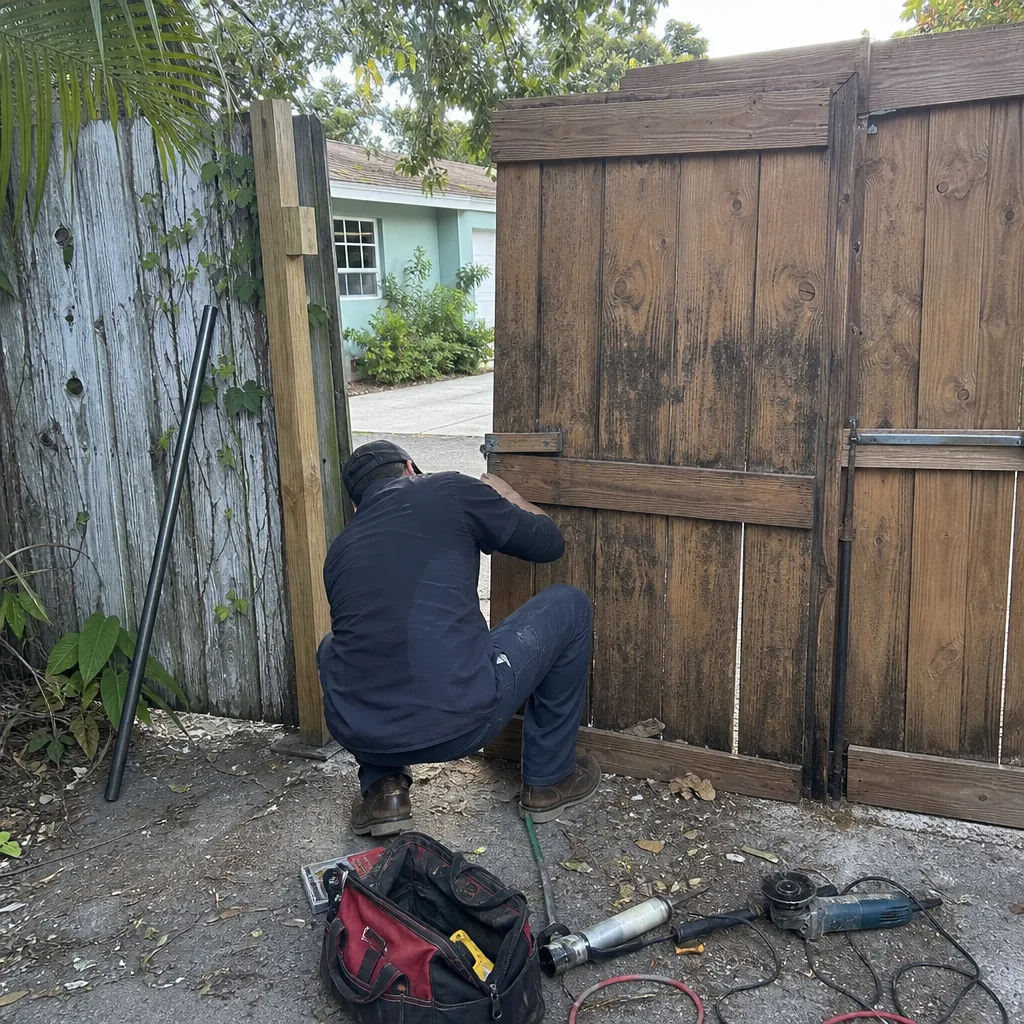 Before
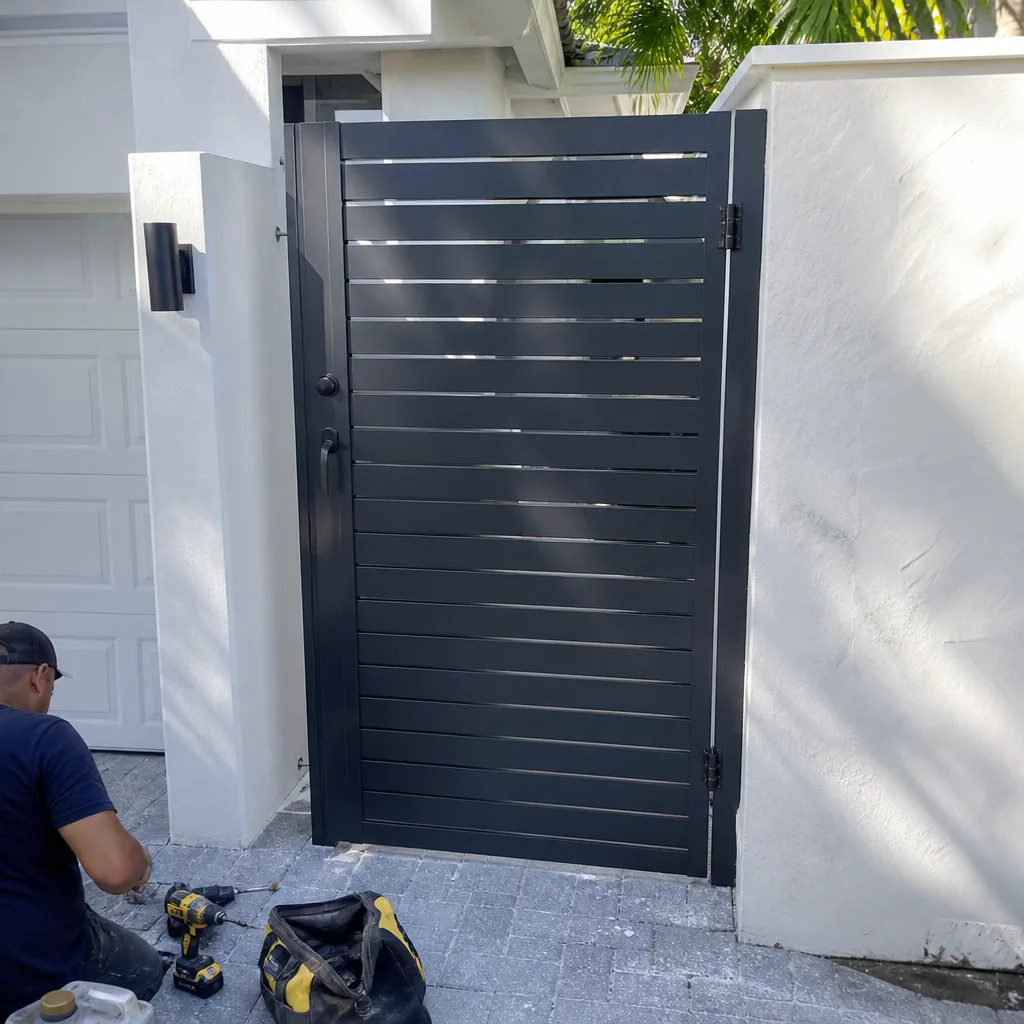 After
After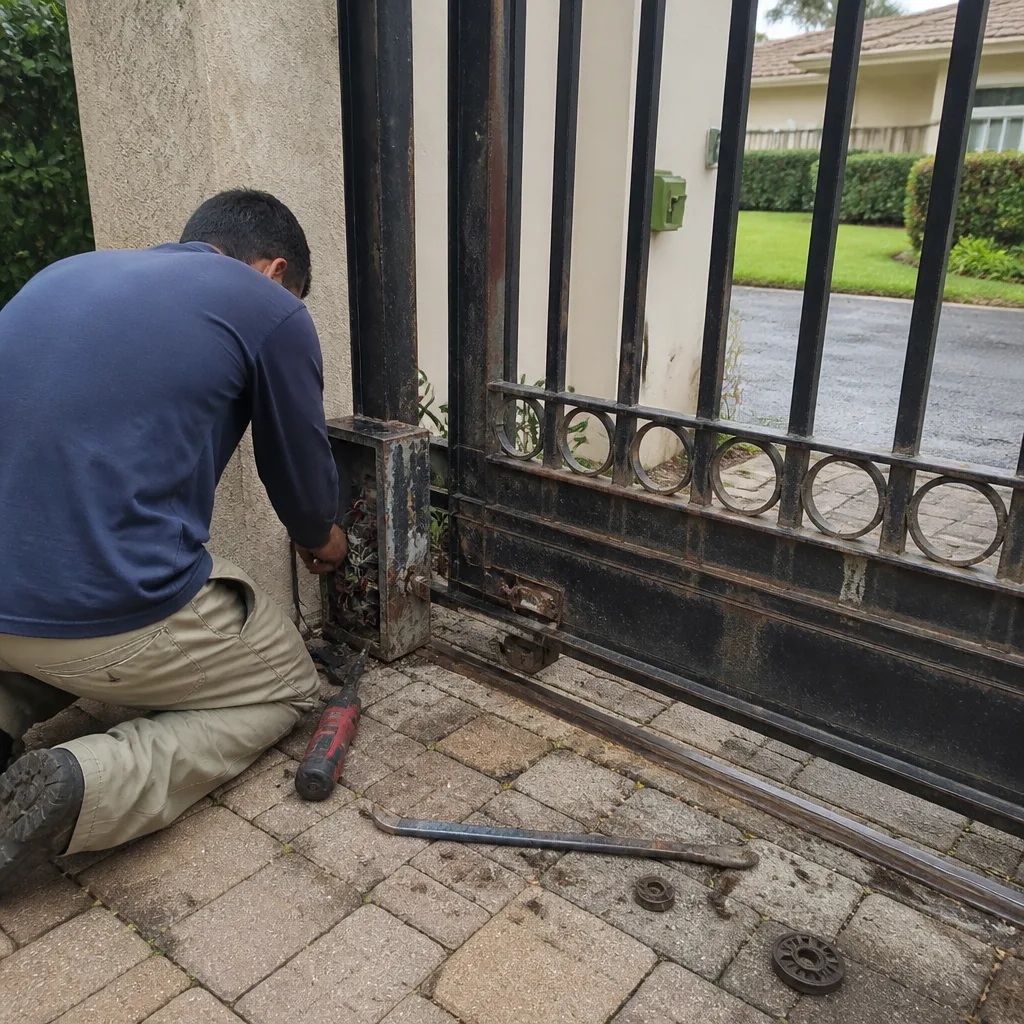 Before
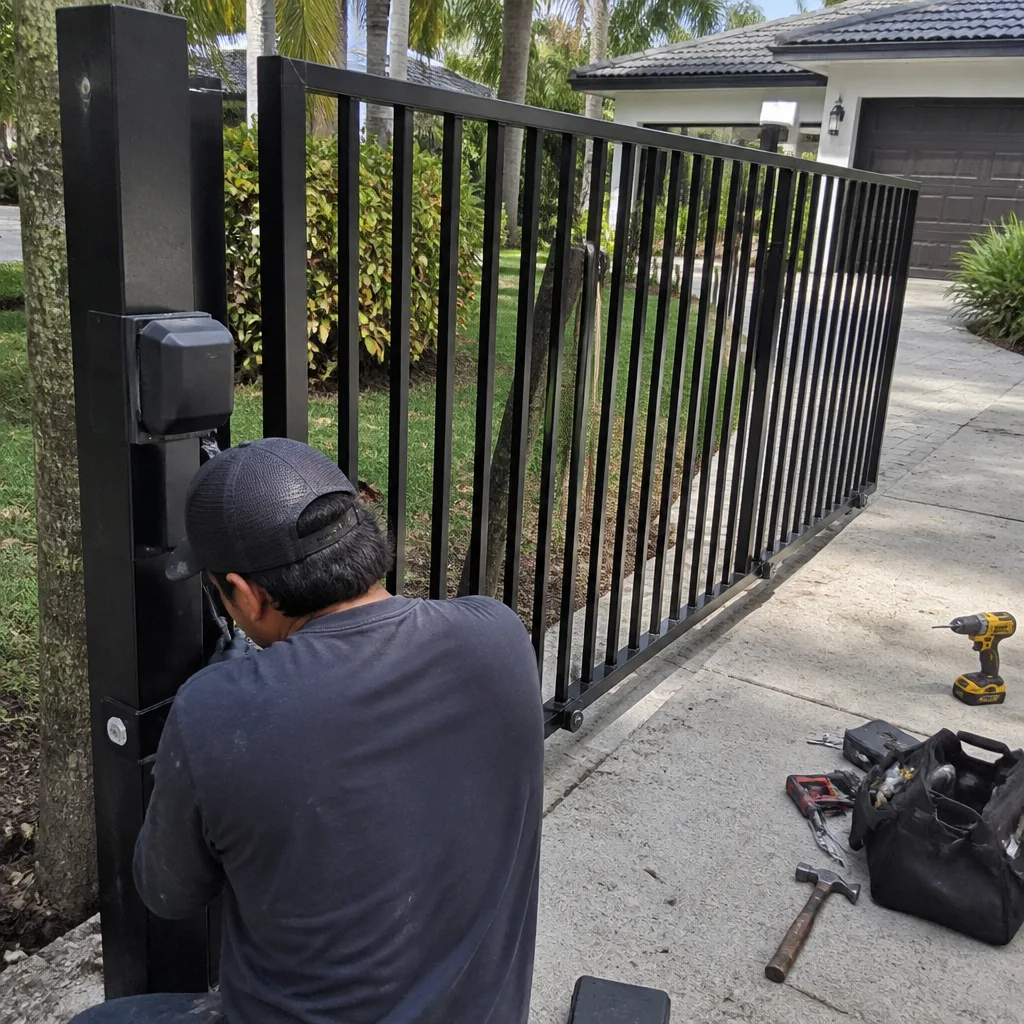 After
After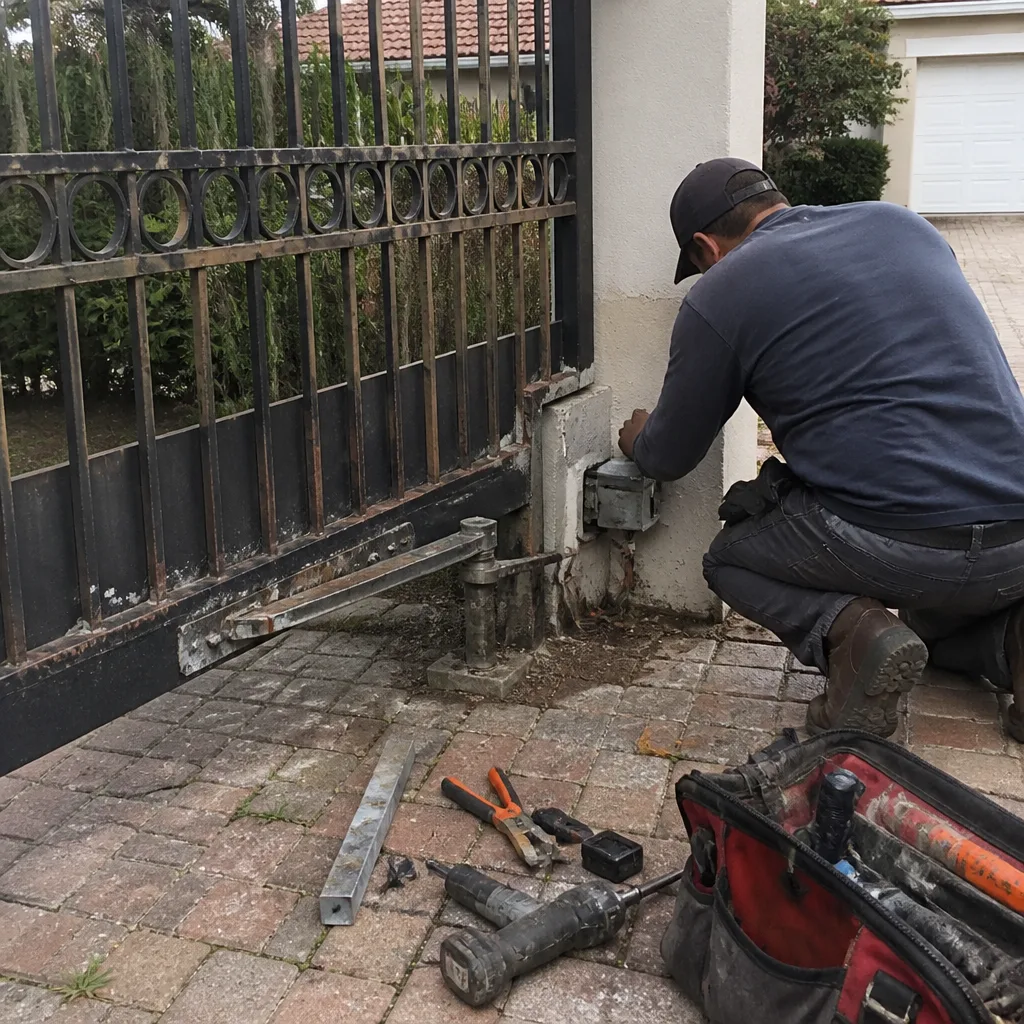 Before
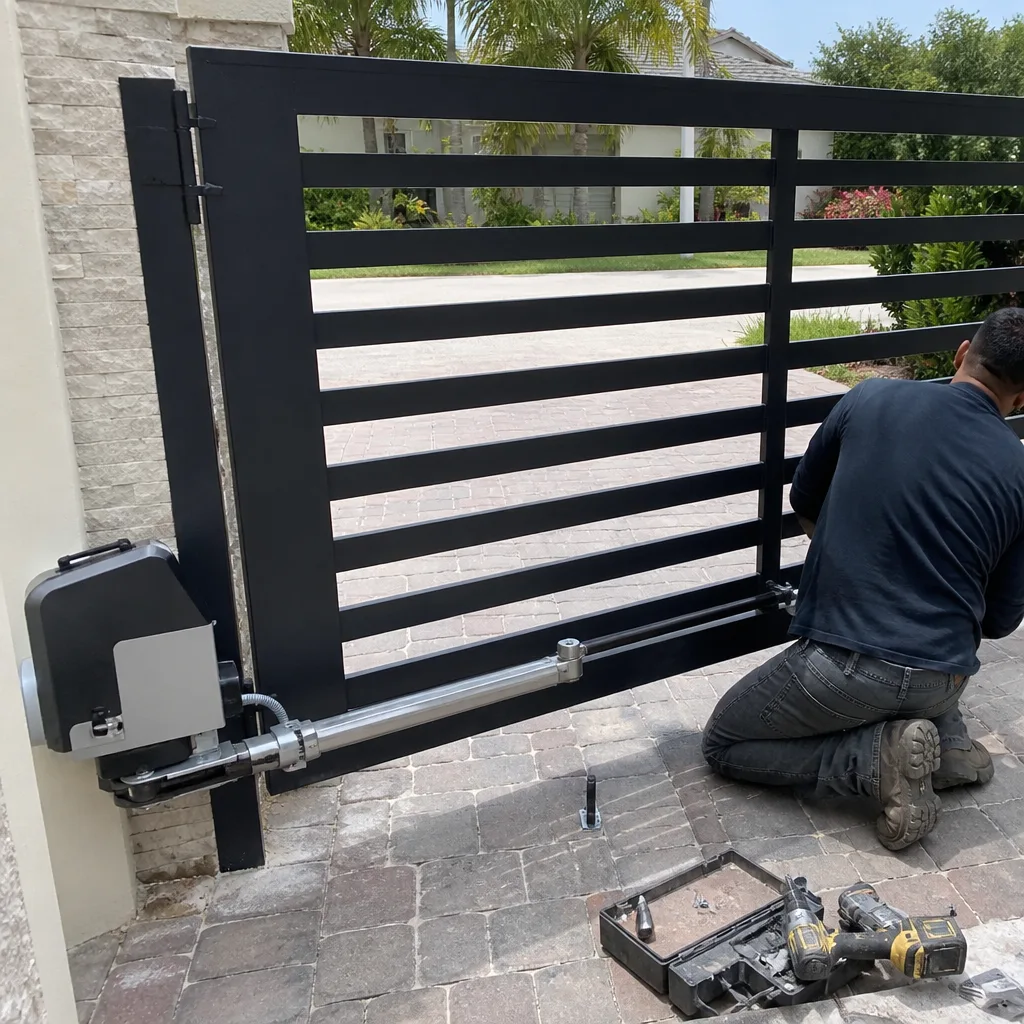 After
After