
Last updated October 16, 2026
 Wrought iron
 Wood & steel frame
 Farm & ranch
 Sliding driveway gates
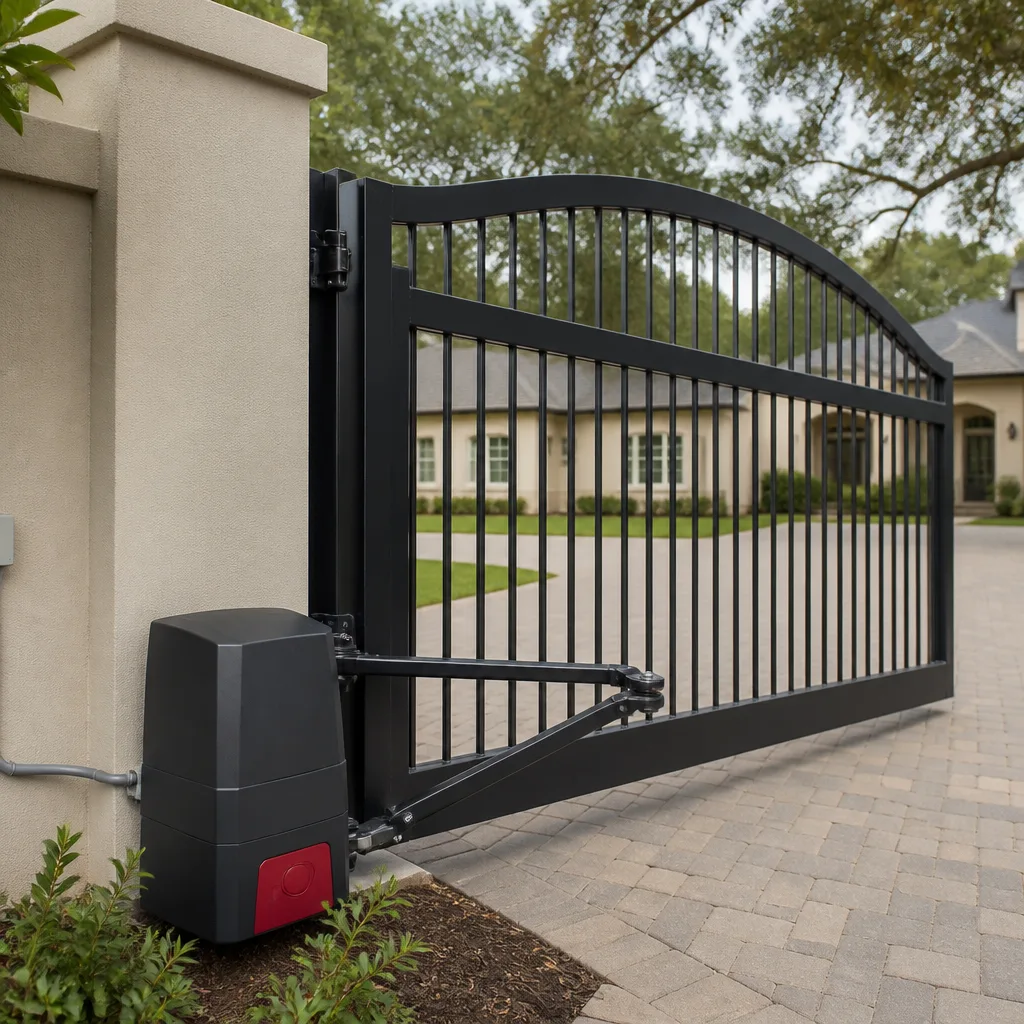 LiftMaster operators
Free on-site gate assessment - hinges, posts, and your LiftMaster or Nice gate operator checked before anything is quoted
The assessment is free and the quote is the invoice.
Get your free estimateGate Repair Maintenance Checklist for Fort Lauderdale Homeowners
After a tropical storm passes Fort Lauderdale, standing saltwater often sits in gate track channels for days. Most homeowners wipe down the visible gate panels, take a step back, and call it good. But the real problem is what they don’t see: the residue pooling in the track, eating at the rollers and hinges from below. That hidden corrosion is what turns a smoothly sliding gate into a grinding, binding repair call six months later. This guide gives you a maintenance schedule built around Fort Lauderdale’s actual threat windows, the hurricane season and the dry season, plus the five-minute inspection routine that catches small failures before they become our Gate Repair services bills.
Styles & brands we work with
Quick Answer
A Fort Lauderdale gate maintenance checklist should follow a two-season rhythm: a pre-hurricane prep pass every May or June, a post-storm recovery check in November, and a dry-season rust audit in February. Every month, spend five minutes inspecting hinge pins, photo eye alignment, and ground anchors. Use silicone-based or dry-film lubricants only, never WD-40, because petroleum-based sprays attract coastal sand and grit that accelerate roller wear.
Table of Contents
- Why Fort Lauderdale Needs Its Own Gate Maintenance Schedule
- The Two Threat Windows: Hurricane Season and Dry Season
- Pre-Hurricane Prep Checklist (May – June)
- Post-Storm Recovery Checklist (November)
- Dry-Season Rust Audit (February)
- The Five-Minute Monthly Visual Inspection
- Lubricants That Work in Fort Lauderdale (and the One to Avoid)
- Testing Battery Backup Before Storm Season
- When Maintenance Crosses Into Repair Territory
- Common Mistakes to Avoid
- When to Call a Professional
- Frequently Asked Questions
- The Bottom Line
Why Fort Lauderdale Needs Its Own Gate Maintenance Schedule
Fort Lauderdale is not Phoenix, and it is not Dallas. The advice you find on a generic gate maintenance blog, oil the wheels twice a year, tighten the bolts, done, was written for a different climate. For more guides & resources tailored to South Florida, keep reading. Here, the air itself works against metal. Salt-laden humidity from the Atlantic sits on every exposed surface. Summer storms dump standing water into low spots. And when a hurricane pushes storm surge into coastal neighborhoods like Rio Vista or Coral Ridge, the saltwater that pools in a gate track is nearly as corrosive as what you would find sitting on a boat hull.
We work on gates across Fort Lauderdale, from Victoria Park to Harbordale to the neighborhoods along the New River, and we see the same pattern every year. Gates that get a focused maintenance pass before storm season survive. Gates that get ignored until the motor starts grinding usually need roller replacement, hinge work, or a full track flush by the time we arrive.
What makes Fort Lauderdale different comes down to three factors:
- Salt exposure: Coastal air deposits a fine layer of salt on gate hardware fourteen miles inland. That salt is hygroscopic, meaning it pulls moisture out of the air and holds it against the metal, accelerating rust year-round, not just after storms.
- Tropical downpours: Afternoon thunderstorms drop two inches of rain in forty-five minutes. If your gate’s drainage weep holes are clogged, that water has nowhere to go but into the track, the motor housing, and the hinge barrels.
- Storm debris: After any named storm, Fort Lauderdale streets are covered in palm fronds, sea grape leaves, and construction debris. A surprising amount ends up wedged in gate tracks or wrapped around the gate motor’s drive arms.
A maintenance routine built around those realities saves real money. In our experience, homeowners who follow a two-season schedule spend roughly a third of what reactive homeowners spend on gate repair in Fort Lauderdale over the course of a year. Every Sunday afternoon spent flushing a track is a repair call that never happens.
The Two Threat Windows: Hurricane Season and Dry Season
Most national gate maintenance guides are organized around the four seasons. In Fort Lauderdale, that structure is meaningless. We don’t have a freezing winter that contracts metal or a spring thaw that shifts concrete pads. What we have is a six-month wet season and a shorter, often-overlooked dry stretch that does its own kind of damage.
Here is the schedule that actually matches South Florida conditions:
- May – June (pre-hurricane prep): Do the full mechanical pass. Tighten, lubricate, test the motor, test the battery, clear drainage paths. The goal is to make sure the gate operates reliably when a storm knocks out power and you need to leave fast.
- November (post-storm recovery): Flush every channel that touched saltwater. Inspect for damage from wind-driven debris. Re-lubricate after the flush. This pass is about removing what the storm left behind before it has months to corrode.
- February (dry-season rust audit): The air is drier, humidity dips, and rust that formed during the wet season becomes visible and inactive. This is the best time to sand, prime, and touch up paint, because the metal is dry enough to accept a proper coating.
Here is a quick reference table for the full schedule:
| Task | Frequency | Best Month |
|---|---|---|
| Full mechanical pass (lube, tighten, test) | Twice a year | May and November |
| Track flush and debris removal | After every named storm | As needed |
| Visual inspection (5 minutes) | Monthly | All year |
| Rust touch-up and paint | Once a year | February |
| Battery backup test | Once a year | Late May |
| Photo eye alignment check | Monthly | All year |
| Professional inspection | Every 18-24 months | Any time |
Pre-Hurricane Prep Checklist (May – June)
The goal of the pre-hurricane pass is not cosmetic. A gate that opens smoothly on a calm Tuesday afternoon can fail on a Saturday morning in August when you are trying to evacuate and the power is already out. We want the gate to operate manually, operate on battery, and stay anchored in high wind. Here is the full prep list, in order of importance:
- Flush the track completely. Use a garden hose with a spray nozzle and work from the highest point of the track down to the drain hole. Get every leaf fragment, sand accumulation, and old lubricant clump out. If the track weep holes are clogged, clear them with a small screwdriver or a bent coat hanger. This step matters more than any other single task on the list.
- Lubricate every moving hinge, roller, and the gate motor’s drive arm. Use a silicone-based spray or a dry-film lubricant like DuPont Teflon or Blaster Dry Lube. Apply lightly, then wipe off excess. In Fort Lauderdale, excess lubricant becomes sand paste within a week.
- Test the manual release mechanism. Find the manual release lever or key on your gate motor. Disengage the motor and push the gate by hand through its full travel. This tells you whether the gate will actually move if the opener is dead. If it binds or drags, now is the time to fix it, not during an evacuation.
- Test the battery backup. Unplug the motor from power (or shut the breaker) and try to open the gate with the remote. If the battery is dead or holds less than a few cycles, replace it. More detail on this below.
- Inspect the photo eyes. Clean both lenses with a damp cloth, check that the little indicator lights are on and steady, and make sure the two eyes point squarely at each other. A photo eye knocked out of alignment is the single most common reason a Fort Lauderdale gate stops closing after a storm.
- Check all ground anchors and bolts. Use a socket wrench on the hinge bolts, the gate wheel bolts, the ground stop, and the posts. Every season some of these work loose from the daily open-close cycle. A gate with loose anchors is a sail in hurricane winds.
- Trim vegetation around the gate. Cut back anything that could whip into the gate or the photo eyes in high wind. Palm fronds and sea grape branches carry surprising weight when they are moving fast.
This entire list takes about ninety minutes for a single swing gate and two hours for a sliding gate. Do it in May, and you enter storm season with the gate in the best condition it can be in. If something on the list reveals a problem you can’t solve yourself, call a gate repair specialist in Fort Lauderdale before season starts, not after. We get calls every August from homeowners who found a problem in May and hoped it would hold. It usually didn’t.
Post-Storm Recovery Checklist (November)
When a tropical storm or hurricane passes over Fort Lauderdale, the aftermath does not end when the power comes back on. Every gate within a mile of the saltwater intrusion zone, and that includes most of the city east of I-95, has been exposed to salt spray, standing saltwater, and wind-driven debris. A post-storm recovery pass is non-negotiable.
Here is the post-storm checklist we recommend after any named storm passes. If your neighborhood saw flooding or storm surge, do every item. If it was a wind event only without flooding, skip the rinse but still inspect.
- Rinse every surface that may have touched saltwater. If your gate track sat in storm surge, that water is now a corrosion agent. Use fresh water from a hose. Rinse the track from the inside, the rollers, the hinges, the bottom rail, and the motor bracket. Do not use a pressure washer too close to the motor housing; a standard hose spray is enough.
- Flush the track with a degreaser, then re-lubricate. Saltwater leaves a film that water alone won’t remove. Use a mild degreaser like Simple Green on the track and rollers, then rinse and reapply silicone or dry-film lubricant.
- Inspect for impact damage. Wind has a way of finding loose hardware. Check every bolt for looseness, every weld for hairline cracks, and every roller for chips or flat spots. A chipped roller will grind its way through a track in a matter of weeks.
- Check the motor housing for water intrusion. Look for condensation inside the housing, water stains, or rust forming on the motor terminals. If the motor got submerged, it needs a professional inspection before you rely on it again.
- Test the full opening cycle several times. Run the gate open and close four or five times. Listen for new grinding, clicking, or hesitation. The first time a storm-affected motor fails is usually in the week after the storm.
- Look at the gate’s paint and powder coating. Salt exposure creates small chips and scratches that become rust blooms within a month. Note any bare metal spots and plan to touch them up during the dry-season audit.
Most homeowners in Fort Lauderdale do a version of the rinse step and skip everything else. The problem is that the visible wipe-down removes the salt you can see and leaves the salt in the track channel, which is exactly where the roller bearing failure begins. The track flush is the step that matters most.
Dry-Season Rust Audit (February)
February in Fort Lauderdale is as dry as the air gets all year. Humidity is lower, the daily rain has dropped off, and the temperature is mild enough to work outside in the middle of the day. That combination makes it the right time for paint and rust work, because coatings actually stick properly when the metal is dry.
Here is what the dry-season audit covers:
- Walk the entire gate surface and look for rust blooms. Pay attention to the bottom rail, the hinge barrels, the weld points, and anywhere the paint has chipped. In Fort Lauderdale, rust starts at the bottom rail first, because that is where sprinkler spray and standing water make contact most often.
- Hit each rust spot with a wire brush. Get it down to bare metal. If the rust has pitted the metal, use a rust converter like Corroseal before priming.
- Apply a marine-grade primer. For coastal Fort Lauderdale conditions, a marine primer holds up better than standard metal primer. Two thin coats beat one thick one.
- Topcoat with a rust-inhibiting paint. Match the gate’s finish, or go a shade darker. The brand matters less than the prep underneath it. A cheap paint over careful prep outlasts an expensive paint slapped over flaky rust.
- Lubricate the hinges and rollers once more as the season shifts. The dry season is actually the best time to lubricate, because the lubricant stays put instead of being washed away by the daily afternoon downpour.
This audit takes about two hours on a Saturday afternoon and it adds years to the life of a metal gate in a salt-air environment. If you find structural rust, the kind that goes through the metal rather than sitting on top of it, that is a repair issue, not a maintenance issue. See Gate Repair Warning Signs: A Fort Lauderdale Homeowner’s Reference Guide to spot trouble early. A gate post with through-rust can fail under load, and that failure happens suddenly.
The Five-Minute Monthly Visual Inspection
The monthly inspection is the highest-leverage habit in this entire guide. We have talked to Fort Lauderdale homeowners who spend an hour every week polishing the gate panels and never once look at the hinge pins. The visible surface is not where gates fail. Gates fail at the fasteners, the bearings, and the joints. Here is exactly what to check in five minutes:
- The hinge pins, every one of them. Put your hand on each hinge and push the gate an inch or two in each direction. The pin should not move inside the barrel. If there is slop or the pin wiggles, the hinge is wearing and the gate’s weight is beginning to damage the post weld. This is a two-minute check that catches the number-one cause of sagging swing gates in Fort Lauderdale.
- The photo eye alignment. Stand at the gate and look at the two small sensors mounted on either side of the opening. The little lights should be solid, not blinking. If one is blinking, the eyes have moved out of alignment, and the gate will refuse to close or will reverse mid-cycle. A simple nudge back into alignment fixes it, but only if you catch it early.
- The ground anchor and the gate wheel (if you have one). Look at the point where the gate’s weight transfers to the ground. If it is a sliding gate, the wheels sit in the track. Check that the wheel spins freely and the track is clear of sand and debris. If it is a swing gate, check the bottom stop and the support bracket. Look for sag, cracks in the weld, or a gap that should not be there.
- Listen to the motor for one full cycle. Open and close the gate once. A healthy electric gate motor sounds like a steady whir. A worn one sounds like a grind, a click, or a hesitation between direction changes. If the sound changes from one month to the next, something is wearing.
That is the whole inspection. Five minutes, once a month. The hinge check alone catches more future repairs than anything else you can do without a tool. If you do only one thing from this guide, make it the monthly hinge pin check.
Lubricants That Work in Fort Lauderdale (and the One to Avoid)
Every big-box-store lubricant aisle has a shelf full of multi-purpose sprays that are fine for a garage door in Ohio and wrong for an exterior gate in Fort Lauderdale. The difference is sand. In coastal South Florida, the air carries fine silica dust, and any lubricant that stays wet becomes a magnet for it. A sticky lubricated hinge turns into a grinding paste hinge in about three weeks.
The rule is simple: never use WD-40 on gate hardware. It is a water displacement spray, not a long-term lubricant. It leaves a petroleum film that dries to a tacky residue. In Fort Lauderdale, that residue bonds with sand and salt, and the hinge or roller wears faster than it would with no lubricant at all.
What to use instead:
- Silicone-based sprays like 3M Silicone Lubricant. They go on wet and dry to a thin film that repels water and does not attract grit. Reapply every three to four months.
- Dry-film lubricants like DuPont Teflon Non-Stick or Blaster Dry Lube. These leave a micro-thin PTFE coating that provides lubrication without any wet residue. They are the best choice for gate tracks, because they do not hold sand and they do not wash away as fast as silicone.
- Marine-grade grease for the hinge pins specifically, applied once a year. Use a grease with corrosion inhibitors made for saltwater boats, like a lithium complex marine grease. Apply it in a thin layer and wipe off any excess.
One more note on lubrication: less is more. We see Fort Lauderdale homeowners literally dripping oil off their hinges, and all of that excess turns into black paste in a month. Apply lightly, work the gate back and forth, and wipe off whatever squeezes out. The goal is a film, not a coating.
Testing Battery Backup Before Storm Season
Every automatic gate in Fort Lauderdale should have a battery backup system. When a hurricane knocks out power, a gate with working battery backup still opens and closes several times before the battery drains. A gate without it is a manual gate. If you are in an evacuation zone and you need to leave, you may not have time to find the manual release key and fiddle with a stuck mechanism.
The test itself is straightforward and takes about ten minutes:
- Locate the battery. On most LiftMaster and Viking swing gate motors, the battery is inside a small enclosure mounted next to the motor or inside the motor housing itself. Some models use two 12-volt batteries in series.
- Disconnect power to the motor. Flip the breaker or unplug the motor’s power cord from its outlet. The motor will switch to battery automatically on most models.
- Cycle the gate open and closed using the remote or keypad. Count how many full cycles you get before the gate slows down. A healthy battery should deliver at least five complete cycles, and the gate should move at normal speed throughout.
- Reconnect power. Flip the breaker back on. The battery will recharge automatically.
- If the gate struggles on battery or does not respond at all, replace the battery before June. Battery backup batteries last three to five years in Fort Lauderdale’s heat, less if the battery sits in direct sun.
Which models allow a homeowner test? On most LiftMaster LA400 and LA500, Viking R6 and G5, and many DoorKing and Elite models, the battery is accessible and the test procedure is exactly what we described. If you are not sure where the battery is or whether it is even connected, call an electric gate repair company in Fort Lauderdale to do the test for you. It is a ten-minute job.
One thing worth adding: a battery backup will not open a gate that is mechanically broken. If your gate was binding before the storm, the battery will not fix the bind. The pre-hurricane prep pass needs to include the mechanical inspection, not just the battery test.
When Maintenance Crosses Into Repair Territory
There is a line where a maintenance task becomes a repair, and crossing that line matters more than most homeowners realize. Under Florida Statute 489, certain gate repair work falls under the scope of licensed contracting, particularly when it involves structural, electrical, or low-voltage systems. For details, see Gate Repair Permits, Codes & Inspections in FL: What You Need to Know. The statute protects homeowners from unlicensed work, and it also establishes when a job requires a contractor rather than a handyman.
Here is how to know which side of the line you are on:
- Lubricating, cleaning, and visual inspection: Maintenance. Any homeowner can and should do these tasks.
- Retightening bolts and adjusting photo eye alignment: Still maintenance, at the boundary. If the adjustment holds and solves the problem, fine. If the gate needs structural shimming or the photo eye keeps drifting, that points to a deeper issue.
- Replacing a worn hinge, roller, or wheel: Repair. This involves load-bearing hardware removal and reinstallation. If done incorrectly, the gate can fall.
- Any wiring work inside the motor, transformer, or control board: Repair by a licensed professional. This is low-voltage system work, and a mistake can create a shock hazard or a gate that operates unpredictably.
- Structural weld repair, post replacement, or track replacement: Repair, and often a permit is required depending on the scope and your municipality’s requirements.
- Using WD-40 as a gate lubricant. In Fort Lauderdale’s sandy coastal air, the petroleum film turns into grinding paste within weeks and accelerates roller wear. Use silicone or dry-film only.
- Lubricating over dirt and old lubricant. New lubricant over a dirty hinge just creates a thicker paste. Clean the surface first, then lubricate.
- Skipping the track flush after a storm. The visible gate panel gets a rinse, the track channel doesn’t, and the salt residue in the track causes most post-storm roller failures. The flush is the whole point.
- Ignoring the manual release mechanism. Most Fort Lauderdale homeowners have never tested theirs. During a power outage, the discovery that the release lever is seized is not a good discovery.
- Using a pressure washer on the motor housing. A high-pressure stream can force water past the housing seals and into the control board. Use a standard hose spray and keep it moving.
- Waiting until the gate makes noise to do maintenance. By the time a gate audibly grinds, the wear is already advanced. The monthly visual inspection catches problems earlier, and earlier is always cheaper.
- Painting over active rust without treating it. Rust continues to spread beneath fresh paint. Brush to bare metal, treat, prime, then paint.
We have seen homeowners in Fort Lauderdale attempt roller replacement on a 400-pound sliding gate with a pry bar and a floor jack. The gate slipped, and the repair went from a $200 job to a hospital visit and a $1,500 gate replacement. The lesson: if the task requires lifting the gate or disconnecting the motor, call a professional. Gate motor repair in Fort Lauderdale is not a do-it-yourself project, and no maintenance guide should pretend it is.
Common Mistakes to Avoid
When to Call a Professional
Some problems should not wait for the next maintenance pass. If your gate has begun sagging noticeably, if the motor trips its breaker more than once, if the gate starts and stops erratically, or if the photo eyes were hit by storm debris and you cannot get the alignment to hold, call a professional. The same goes for any electrical issue: warm motor housings, burning smell, or outlets that spark when the gate cycles. And if your gate was submerged in storm surge, the motor needs an inspection before you trust it again, even if it seems to work. Warden Gate Repair Fort Lauderdale offers free estimates in Fort Lauderdale and can usually schedule an inspection within a few days. You can reach us at (754) 354-9065 any time.
Frequently Asked Questions
Every 18 to 24 months is the right professional service interval for a Fort Lauderdale gate, ideally once before hurricane season when the schedule allows. Between services, the monthly visual inspection and twice-yearly maintenance passes cover the routine work. A gate that is serviced on this rhythm rarely surprises its owner.
A professional gate maintenance visit in Fort Lauderdale typically runs between $125 and $250, depending on the gate type, the number of operators, and whether any parts need replacement during the service call. A full tune-up with lubrication, track cleaning, photo eye alignment, battery test, and motor inspection is at the higher end of that range. If you want a specific price for your gate, call (754) 354-9065 for a free estimate.
Flushing the track and keeping the rollers free of salt and sand is the single most important maintenance task, because coastal debris and saltwater residue are the leading causes of roller failure in Fort Lauderdale. The second most important task is the monthly hinge pin check, which catches sagging before it becomes structural damage.
The maintenance tasks in this guide, lubricating, cleaning, inspecting, tightening bolts, testing the battery, are all safe for a homeowner to do. Tasks that involve lifting the gate, replacing load-bearing hardware, or opening the motor housing fall under repair work and should be handled by a licensed technician under Florida Statute 489. When in doubt, call first.
Run the battery test described above: disconnect power and count the number of full gate cycles you get on battery. If the gate slows down noticeably, fails to complete a cycle, or delivers fewer than five cycles, the battery is weak or dead. In Fort Lauderdale’s heat, backup batteries typically last three to five years.
Flush the track with fresh water, remove all debris, re-lubricate the rollers and hinges with silicone or dry-film lubricant, and test the gate through several full open-close cycles. If the gate was submerged in storm surge or the motor housing shows signs of water, have a professional inspect it before you use it regularly. For post-storm gate inspection in Fort Lauderdale, call (754) 354-9065.
The Bottom Line
A Fort Lauderdale gate is not a set-it-and-forget-it appliance. The salt air, tropical storms, and sandy soil create a maintenance environment unlike anywhere else in the country, and the schedule that works is the one built around those conditions. Do the full mechanical pass in May. Flush the track after every storm. Do the rust audit in February. Spend five minutes a month on the hinge pins, photo eyes, and ground anchors. Use the right lubricant and skip the WD-40. Most gate failures in Fort Lauderdale are not sudden, they are the final result of months of skipped checks. If you stay ahead of the schedule, your gate stays out of the Warden Gate Repair Fort Lauderdale home service queue altogether. Call (754) 354-9065 for a free estimate if you ever want a professional second opinion.
Written by Cole Rafferty, Owner at Warden Gate Repair Fort Lauderdale, serving Fort Lauderdale since 2008.
See the difference
 Before
 After
After Before
 After
After Before
 After
After